Wednesday, July 4, 2012

Scouting Trip

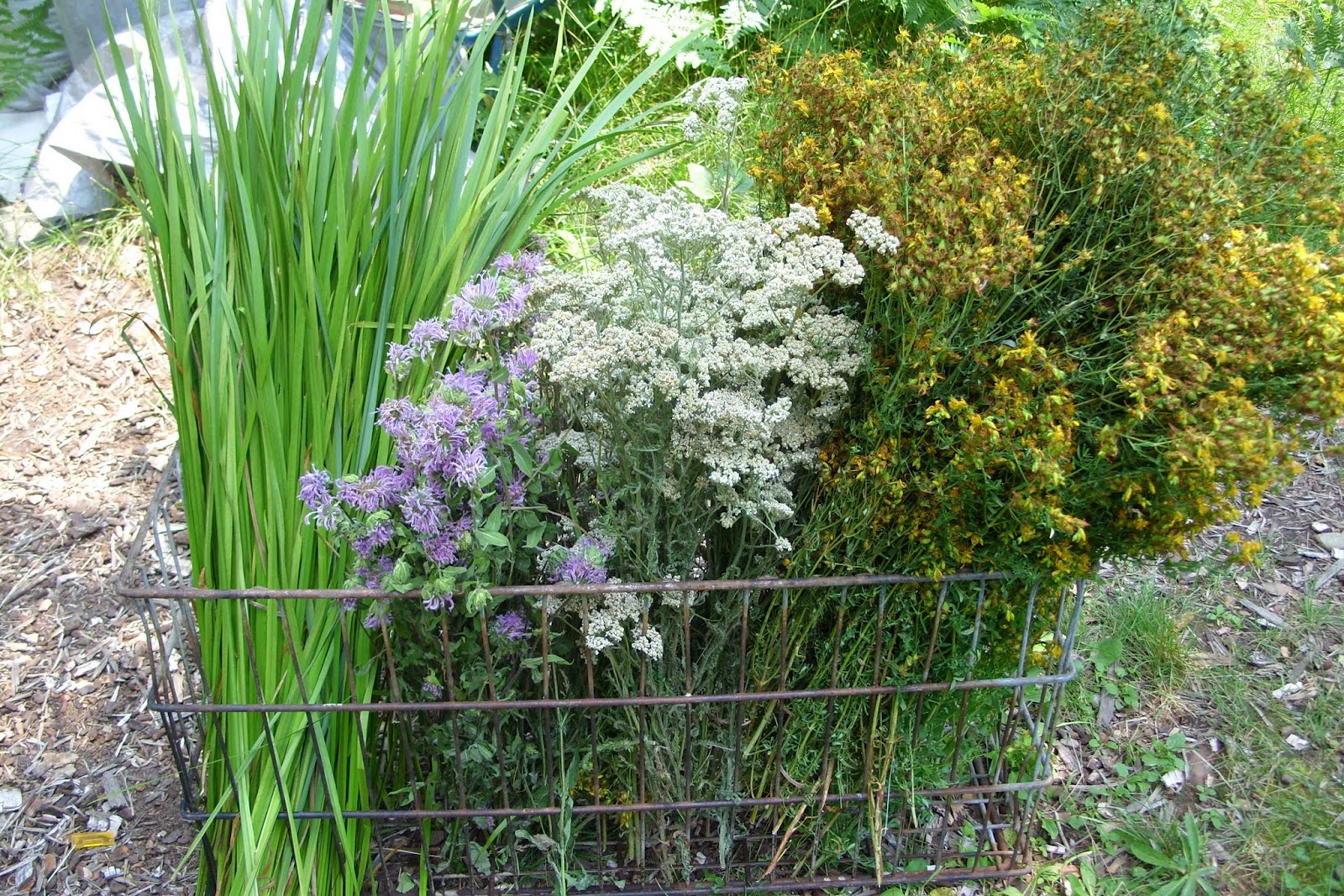
On our scouting expedition yesterday we were intent on picking linden flowers. Linden, A.K.A.,  basswood, are large trees so in order to pick their flowers you have to find young smaller trees that are blooming. Usually the ones on the edge of a wood where they get more sun bloom young. We know of just such a spot but no luck, or not much luck anyway. The big mature trees have lots of blossoms but the smaller bushy trees that we can reach were  almost devoid of blooms.Oh well, that is the way of foraging.  We did harvested these medicinal and tea plants however. Left to right, sweet flag, wild bergamot, yarrow, and st. johns wort. As for the scouting part we were checking out several areas where we harvest wild rice. Right now it looks like a decent crop but that can change of course. We saw lots of hazel nuts and nanny berries but no black cherries. Red oaks look like they will have a moderate crop of acorns this year.

We needed a much larger dehydrator to hold some of the plant material we harvest. This year I started building the beast pictured. All very low tec, use what ya got, sort of contraption.Big pallet with a crate attached forms the base. Then I added a frame to hold a piece of sheet metal. This was painted flat black and then covered with some surplus storm windows.Warm air rises and enters the crate, as it cools it settles and is pulled back into the heat exchanger area. Couple of bars in the crate let us hand plants in the box to dry. I will be adding some cleats to hold trays which I have to build yet. With on and off sunshine and a slight haze temps in the middle of the crate were hovering around 120 F.I have two small solar panels I am going to add to power a small vent fan . I have to make a actual door instead of the piece of plywood leaning against it and caulk a few joints which should let it reach a little higher temps. I'm shooting for 130-140F. which will let us dehydrate veggies and some fruit too.
On a side note, this is post #101!
( What do you think Wilma?)
                       

Tuesday, July 3, 2012

Heal-All

Here is a great medicinal plant I am going to gather today. It is Heal-All,Self-Heal, Prunella vulgaris.
It is a perennial of the mint family which is indicated by it's weakly square stem and the shape of it's flowers. Research shows it contains ursolic acid which is a antitumor compound. Some research suggest it possesses antibiotic ,and hypotensive  properties.One traditional use that I like is using a leaf tea as a gargle for sore throats and mouth sores. It is used in traditional Chinese medicine also. Used in reasonable amounts, there does not seem to be any toxicity issues. As always do not use any plant you can not 100% positively identify, and of course, this is a description of traditional uses and not medical advice!

On a different note, here is a view of our main garden. Every thing is doing fairly well but the insects are out in huge numbers this year. I have been dusting with diatomaceous earth ( DE ) on a regular basis. It has been dry enough that slugs are not to bad. They can be problematic with deep mulch during a wet year. The deep mulch is great weed control and most of the garden is fairly weed free. I actually am leaving some weeds grow, both as bait a crop for the bad bugs but also as habitat for good bugs. I don't let the weeds go to seed but being totally weed free in a organic setting is not practical nor desirable. Besides, a lot of those "weeds" are great food!

Monday, July 2, 2012

Suckering Tomatoes

If you live in an area with a growing season that just manages to provide 90 frost free days like I do, removing suckers on your tomato plants is a worth while task. It is especially helpful on some of the old  open pollinated indeterminate varieties. They seem to put on suckers as fast as you can pinch them off but pinching them off forces the plant to put it's energy into maturing the fruit already on the plant instead of growing more shoots.A sucker is the shoot that grows out of the junction of a limb and the main stalk like the one my knife blade is resting on. I just pinch it off with my fingers. I also like to stake my tomatoes rather than using cages. I tie them up with stripes ripped from old tee shirts. I tie the strip to the stake and then make a loose loop around the main stalk of the plant.
Here on the left is a recent pic in the high tunnel. I have the stakes fastened to the frame of the tunnel so they can easily support the tomato plants. So far they seem to like the extra heat they are getting although if this heat wave continues it won't matter. We have had to start watering the garden and new trees and shrubs again. It is hovering around the 90 degree mark which is nice compared to what much of the country is getting but still enough to make plants suffer quickly without enough rain.
 The pic to the right is interesting because of those bees lined up with their butts in the air on the right edge of the landing board. They are on fan duty, moving air into the hive to help cool it. Notice how the rows alternate spacing to maximize the effect. Amazing creatures!

Saturday, June 30, 2012

Cattail Pollen

 We collected a little cattail pollen today. The top pic shows a cattail in full bloom. The top yellowish part is the male part which produces the pollen. Directly below is the female part which will become the familiar brown seed head later on. The male part above will shrivel up to almost nothing after doing it's job. To collect the pollen we use empty plastic milk jugs. We simply slide the whole head into the jug and give it a few good shakes. A lot of the pollen falls into your jug. It adds up a lot faster than you would think. We collected about 3 cups in two hours, including drive time. This year is sort of strange, there being plants already setting seed and no pollen left, and plants just starting to form the blossom next to them. We jokingly call the pollen corn MSG because it enhances the flavor of corn so much. Ann adds it to corn bread, pancakes,etc. Probably other stuff too but she is secretive about her recipes! Below is our days haul. The pic doesn't really do justice to the color.
It was a beastly hot day so wading around in the cattail bog was a pleasant way to escape the heat. We have permission to collect in a huge stand of cattails close to home but they don't seem to be blooming yet. This is definitely one of those wild foraged foods that is most useful for it's novelty effect rather than a big addition to your diet.

Friday, June 29, 2012

Elder Flowers

There seems to be hope for a big crop of elderberries, Sambucus canadensis,  this year judging by the amount of blossoms on them. We picked several grocery bags full today. We will dry them for a pleasant tasting tea and I will make a large batch of elderflower wine. I'll put that recipe on the recipe page soon. When picking blossoms of any plant bear in mind the fact that if you pick all the blossoms there will be no fruit. We generally adhere to the rule of taking no more than 1/6 th of the available crop. The second pic is of the same area after we were done picking in that area.
The blossoms are also sometimes eaten in pancakes and fritters. Other than the ripe fruit and blossoms ,the plant is considered somewhat toxic. Despite this, there are quite a number of historic and folk remedies using various parts of the plant. I stick with the blossoms and fruit and don't worry about it. One thing that we must at least be aware of, if not actually worry about, is the fact that there are a few plants out there that are genuinely killers. Water Hemlock, Cicuta maculata, is one of them. I took the bottom pic 10 feet from the elderberry plants. They obviously have a superficial resemblance to each other.
POISON!!! Water Hemlock
If you have trouble distinguishing between a head of lettuce and a head of cabbage, maybe foraging is not for you. For most of us, there is no difficulty telling them apart. The real danger lies in not paying attention and accidentally picking the wrong blossom along with the one you want. The best insurance is to learn to identify any plant in your area which is toxic. If you know how to ID a plant there is little chance you will pick it by mistake. After all, our ancestors did it for thousands of years!


Thursday, June 28, 2012

Get To Work!

 The foraging season has kicked into high gear with dozens of plants waiting to be harvested. This pic is of Wood Sorrel, Oxalis stricta, often call shamrock. The leaves and seed pods make a great addition to a salad, contributing a nice sour note. Unfortunately the leaves fold up almost as soon as picked so you don't get the cool shamrock visual effect. While not a staple food source, there are many wild plants and "weeds"  waiting to be made into a very nice salad. Dump the iceburg lettuce, and come over to the wild side. Your salads will be tastier and you will save a few dollars too.
This week we have several items we want to harvest. Elderberries are in full bloom and we will pick a lot of those. Some we will dry for tea. I make a elder flower wine also so I need  bunches for that. I'll post that recipe just as soon as I find it! Seems to have been misplaced. The basswoods or lindens,as they are sometimes called, are blooming too. I hope our bees find them, it will be great tasting honey. We will pick those too, for tea. We have had enough rain lately so I will be watching for several species of mushrooms which should fruit now.


Here are a couple medicinal plants I spotted yesterday. This one is Round-Leaf Pyrola, Pyrola rotundifolia, which I have never used. It does act as a styptic among it's other uses so that is handy to keep in mind. It does contain arbutin, which the body breaks down into hydroquinone,which is toxic. It is also a proven antibacterial agent. If I were to use it at all it would be in a salve for skin eruptions.
Below is Common St. Johnswort, Hypericum perforatum, popular now as a anti depressant, and used for that quite extensively in Europe according to some sources. It does cause photo sensitivity so use with caution if you're outside a lot.  It contains 6 or 7 known biologically active compounds. I'm sure once drug companies figure out how to patent some of them it will be used more extensively in western medicine.

Tuesday, June 26, 2012

Wild Food Summit

We got back from the Wild Food Summit at White Earth, MN. yesterday. It was a positively great event again this year. Getting together with a hundred or so people with mutual interest in foraging wild foods and some of the top teachers and experts in the field for four days is a hard event to beat. Add to that great food, much of it foraged on the spot, and prepared by outstanding chefs with all volunteer staff helping. Here are a few pics I managed to snap between classes.
Top is bannock, a quick bread, being baked in dutch ovens. It was delicious! Next pic is the bread of course. Back to top pic ,that kettle off to the side is full of acorns being leached to remove excess tannins , this was from a class by Sam Thayer. He is a outstanding teacher. If you are interested in foraging wild foods, get his books, there are none better.
Here is a pit oven that was used to bake 22 chickens for the hungery hoard. I didn't get over in time to get a pic of chicken coming out, root vegetables are just coming out in pic. The chicken had a very delicate smoked flavor that was fantastic.
 Here is a demonstration on black walnut preparation.   This session was by Mike Krebill, another nationally known teacher in the field with many awards to his name. Both Sam Thayer and Mike are really very modest, down to earth guys, despite the many awards they have earned. In this pic are nut crackers capable of taking on the black walnut. It was very nice to be able to try the different brands in case you were planning on buying one. My personal choice would be the nearest one.
 Here is a sulfur shelf, a.k.a., chicken of the woods, that was found near by.
And here is a totally awesome moth I got a pic of. No idea what it's name is as I haven't had time to research it yet. So, enough of my vacation pics. If you are interested in wild foods attend some event of this kind. Not only will you learn, you will meet great people with similar interest and if you are lucky you will make new friends as we have every time we attend.This particular event feels like a family reunion to me! AND, you lucky folks, I happen to know of such an event coming soon. Check it out.
   The Midwest Wild Harvest Festival will be another great event. www.wildharvestfestival.org